
In The Waters
About a sacred place we should protect

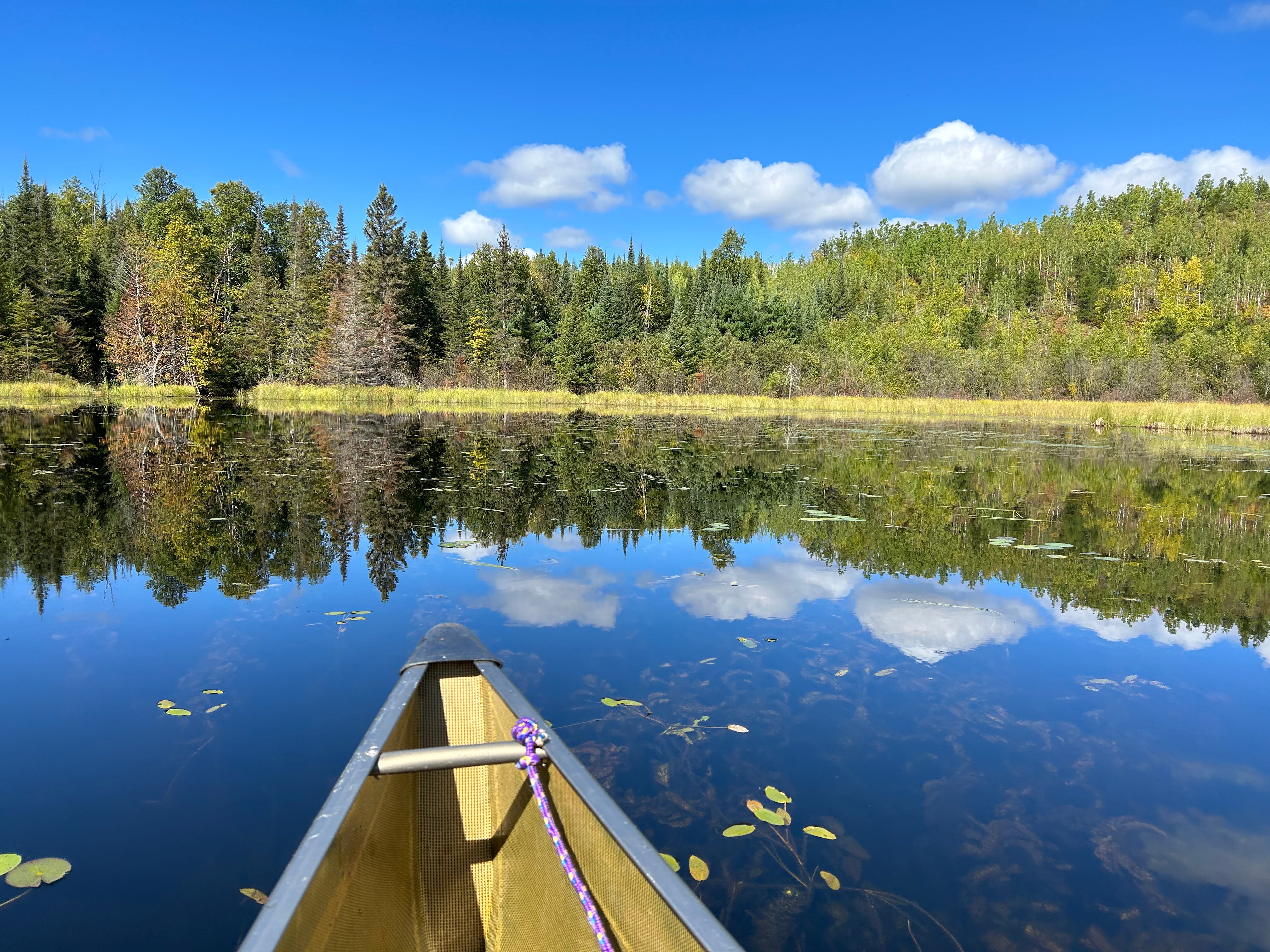
I have been wanting to tell you about one of the most magical places I have ever been to since I started writing here, but I could not find the voice for it. Recent events have urged me to try anyway.
My husband went twice, years before we met, and always said he wanted to take me. In 2021, already geared up for previous hikes and failures, we loaded our ultralight backpacks, camping gear, and freeze-dried food into my Jeep and headed north on a 24-hour drive to Ely, Minnesota.
In Ely, we were outfitted with a two-person canoe and a cabin to sleep in the night before heading out to the Boundary Waters Canoe Area (BWCA) for five days. Besides the canoe, paddles, and life vests provided by the outfitter, everything we would need for the roughly sixty-mile trip was in our packs or on our bodies.
I was not ready. The pandemic, depression, and a miserable work environment had put weight on my body and soul. I was the heaviest I have ever been, and pretty beat up, emotionally. My husband, in contrast, was (is) ten years younger than I, fit, and seemingly incapable of being depressed, ever. Fucking awful, I know.
In the name of full transparency, I am a complainer. If I am forced to do anything I do not want to, there’s a very good chance you’re going to know about it. Especially if it is physical. I’ll do it, but there’s going to be a lot of cussing. I love to move and dance, and play, but hate exercising for the sake of exercising. At this point in time, carrying thirty extra pounds, pretty much all physical activity was unappealing to me, even dancing. So, it was fair for my husband to assume that I was going to be a true pain in his ass on this trip. I assumed the same, although I was going to make a conscious effort not to be.
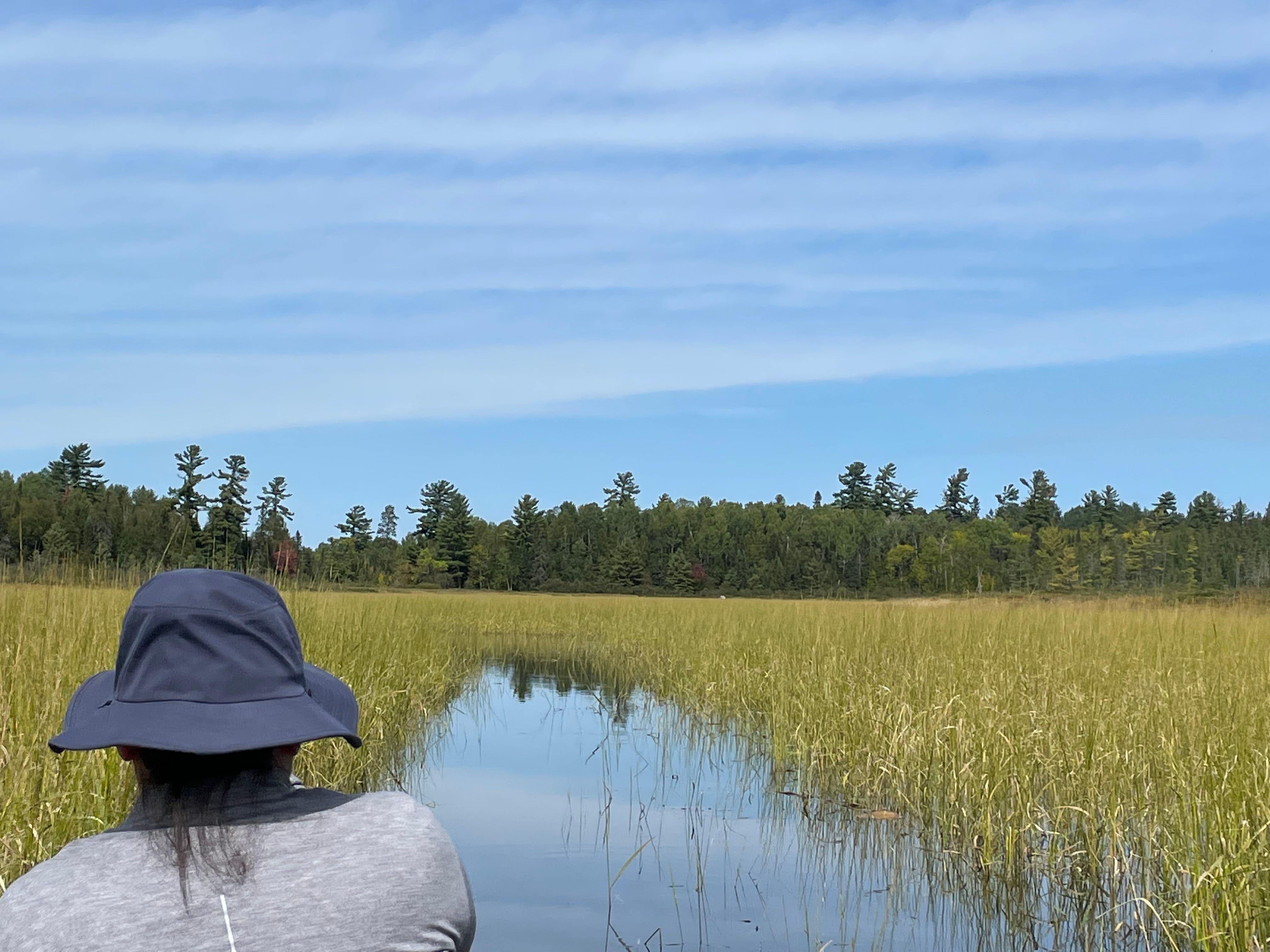
Day one, we put in on Moose River and paddled upstream. It does not take much time to be in the proper wilderness and for cell phone service to disappear. The water was calm and glassy, but low. We had to get out and walk the canoe through the mud in a few areas but once we were about a mile in, everything changed. It was the dawning of reality that we were on our own and away from civilization. It was exhilarating in the way that only something wild can be.
We floated through grasses and water lilies, pushing the black tea water quietly with our borrowed paddles. I was in front, as the “motor,” and Erich steered from the back. All around us was quiet, and we were reverent to it, as a holy library, speaking softly only when the awe of the moment was too great to push into silence.
And the awe was great and plentiful. There was no end to nature and her magnificence. It was as though she had inhaled us, flora brushing us like cilia, as we floated deeper into her dreamscape.
Not long after our drift had lulled me into a blissful assimilation with my new environment, it was time to find our first portage. We were taking the same path Erich had, but that had been years before, and the water was low, so things looked different. He pointed to where he thought it was, and we got out and trekked north a bit to scout the trail. There was none, but we could see from a higher vantage point where we had gone wrong and where we needed to be in order to portage to the next body of water.
Back into the canoe. This was only my second canoe entry and, if you’ve read my piece, I Do All My Own Stunts, you will know that I am not very sure-footed. Long story short, I ended up in the water. Thankfully, it was September, and the water was still warm from the summer months. Warm-ish, anyway. It took a bit, but I was finally able to climb back in so we could paddle two minutes over to the actual portage. In hindsight, I probably should have just swam over, but there is something creepy about being in water you can’t see through, and it had me in a minor panic.
We arrived at Lake Agnes and paddled to the other side before deciding to camp there for the night. After Agnes, we would be entering bigger waters, and the going would not be as smooth or easy to navigate. Agnes, as our outfitter had told us the day before, had what they called “educated black bears,” meaning the bears there had figured out how to retrieve food packs from trees and even bear cans. Needless to say, I was not super stoked about this, but I figured I had hiked in grizzly country and not died there. Black bears could probably be scared off.
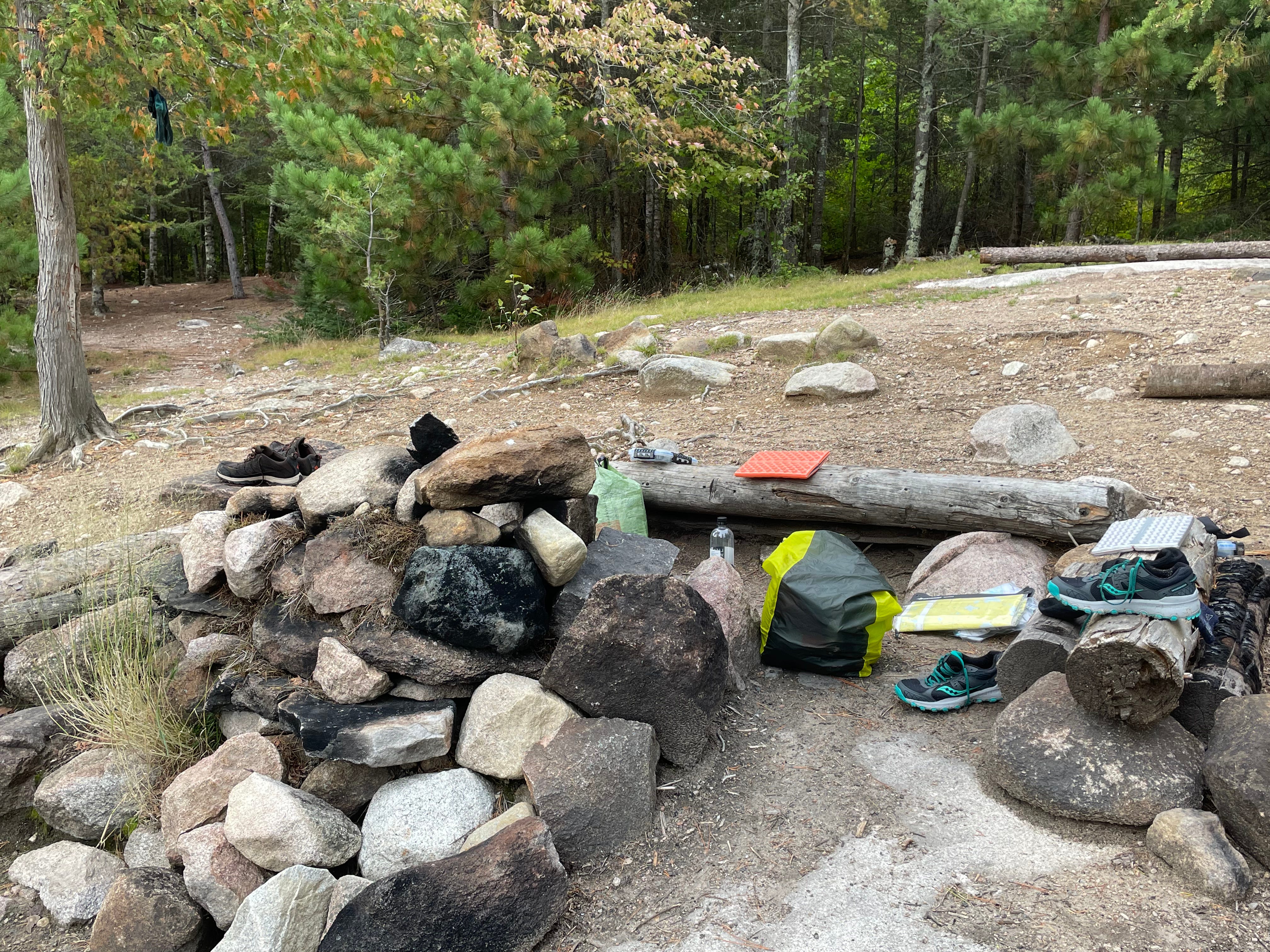
We set up our tent and used our mini stoves to make our meals. It was only 4:30 PM when I crawled into the tent to lie down. I was exhausted from the day’s paddle. Erich, being the gentle soul he is and perfectly contented with his own company, did not object or give me a hard time. He simply went about finding a suitable tree to hang our food and do a little fishing off the lake’s bank.
I dozed quickly, then woke startled when I heard a sound that made me think of bears. Mind you, I have never heard an actual bear in all my life. But this sound was unfamiliar and intentional. After a moment of sleep paralysis, I was able to call out to my husband.
“Yeah?” he called back.
“Is everything OK?” I asked, heart pounding in my chest.
“Yep, just hanging the food bags,” he responded.
I realized the sound I heard was the nylon ropes dragging over the branches as he hoisted the food bags into the tree. I sighed, thankful I was not about to be eaten and that Erich would not have to try to fight a bear to keep that from happening (I assume much), and fell back to sleep.
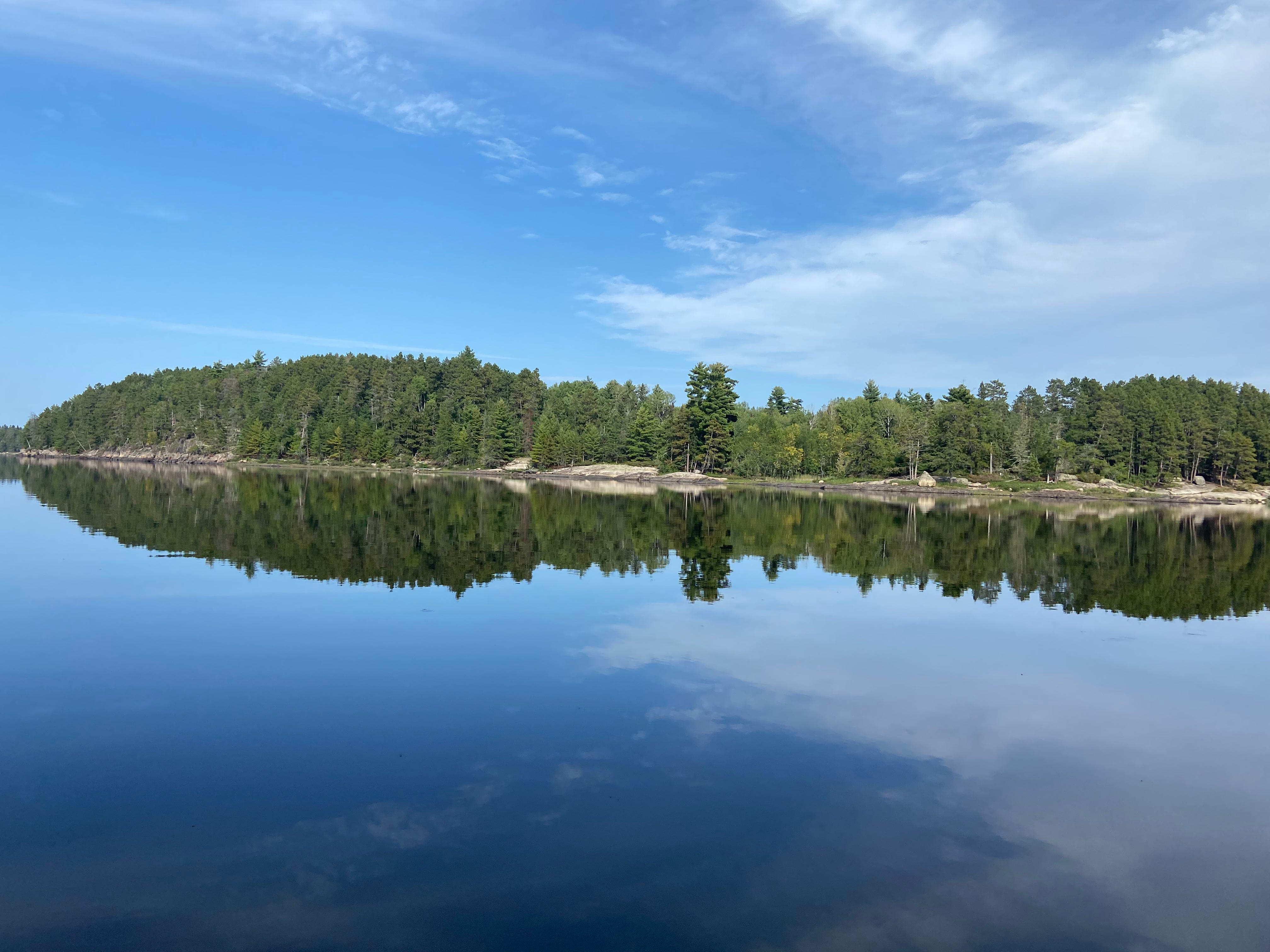
We rose early the next morning, drank our instant coffee, broke camp, and started off again. In the early morning hours, the water is calm and smooth as a mirror. Which was exactly what it looked like as the islands and sky reflected perfectly upon it. The effect was disorienting, making me feel as though I could fall forever, in either direction. It was a strange and fascinating sensation.
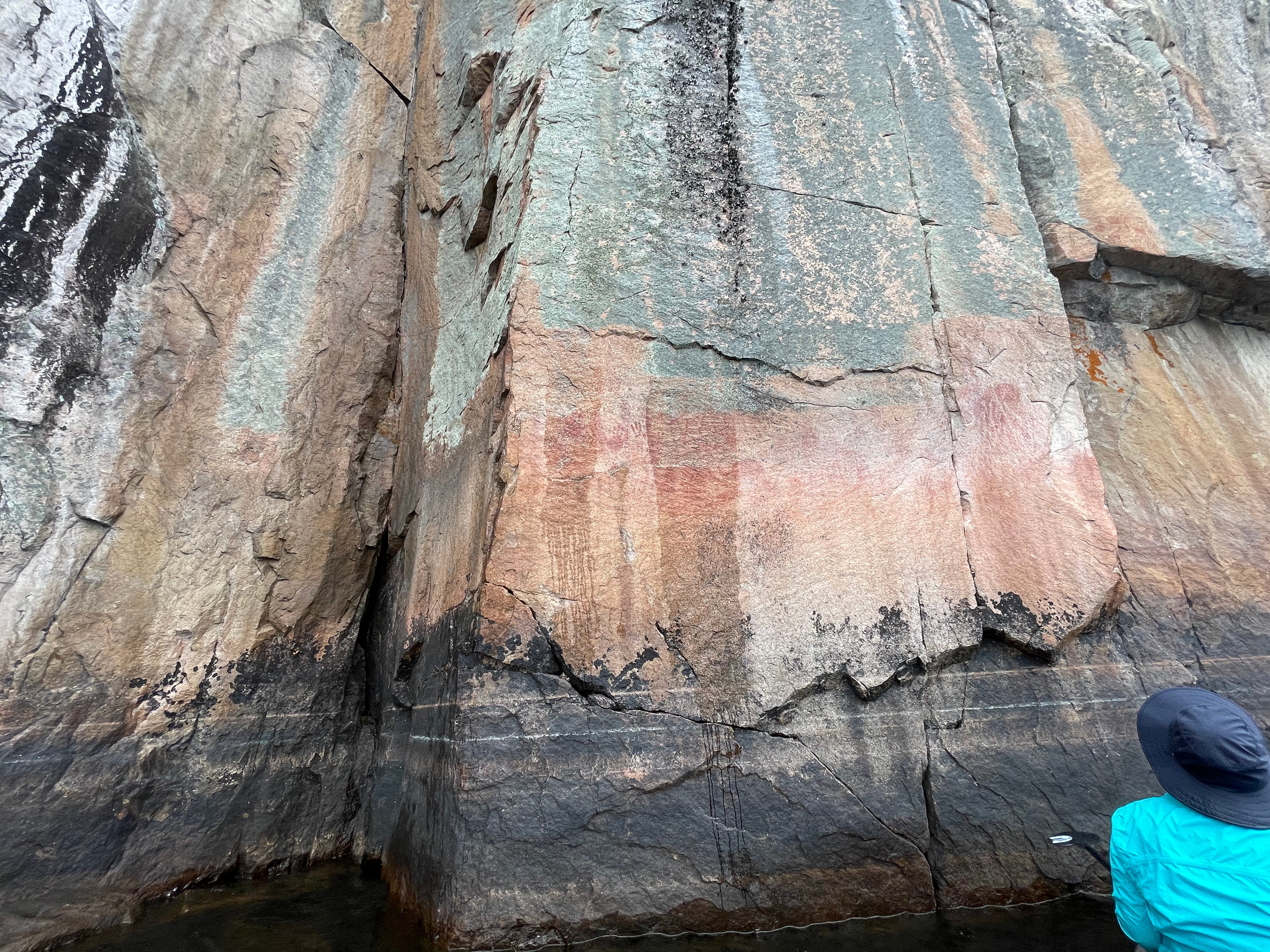
Around 10 AM, we were in Lac La Croix, nearing the pictographs on the Canadian side. The weather, which had started out sunny with light, puffy clouds, had turned drizzly, and the waters were choppy as hell. I paddled my ass off, and it felt as though we barely moved. Eventually, we made it to the giant rock that loomed over the water. There, we could see red and brown handprints, the image of a moose, and several other paintings, some of which I could not decipher. They are hundreds, maybe thousands of years old.
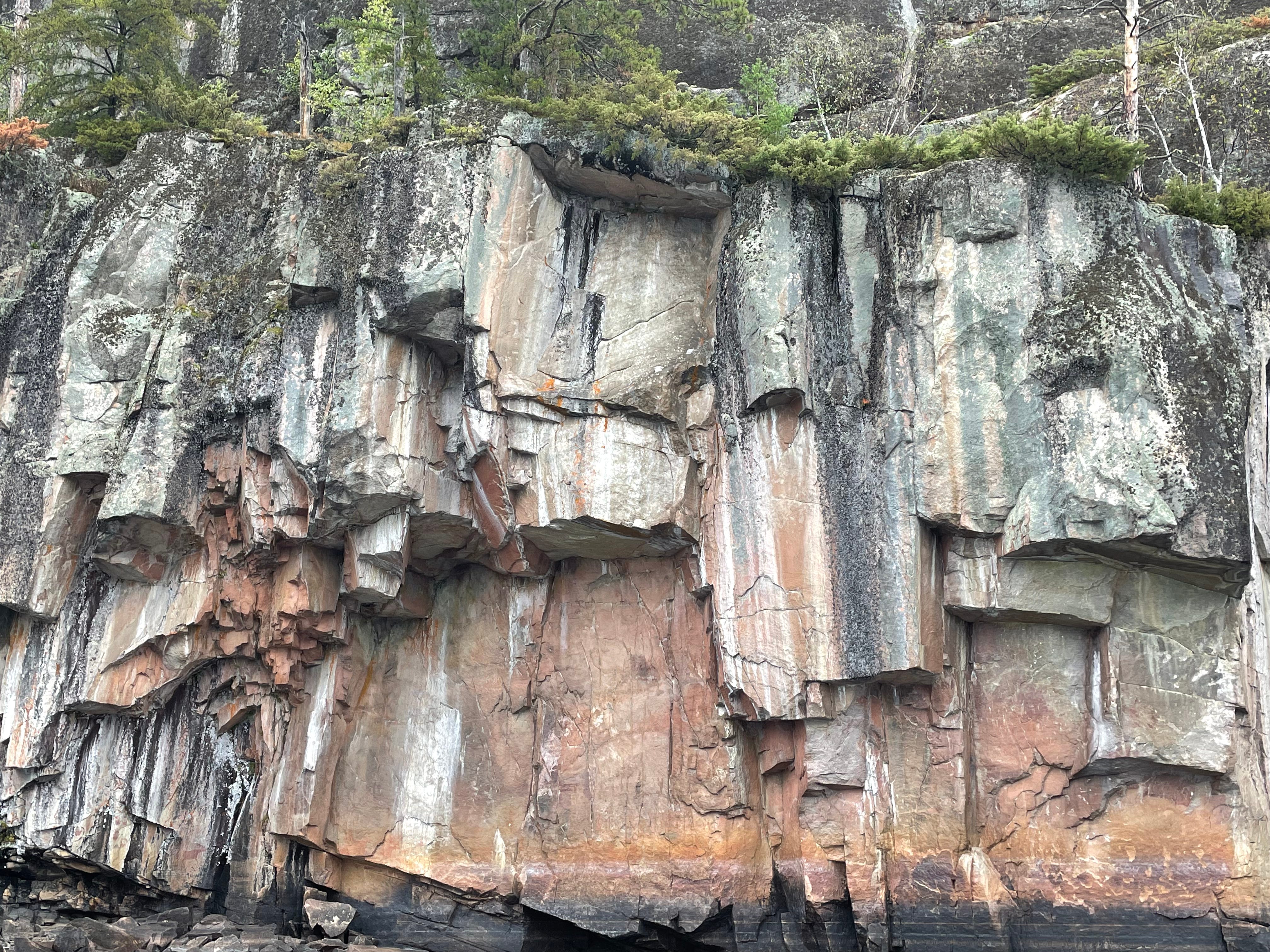
It felt sacred.
“You can see why this was a special place to them,” Erich said, as we looked up at the looming rock. There was no way for anyone to paint them from boats or the water. These were done while the lakes were frozen over in winter. Erich said he imagined young natives getting a running start and jumping up with color on their hands, trying to mark the highest point. I could see it, too, and the thought warmed my heart.
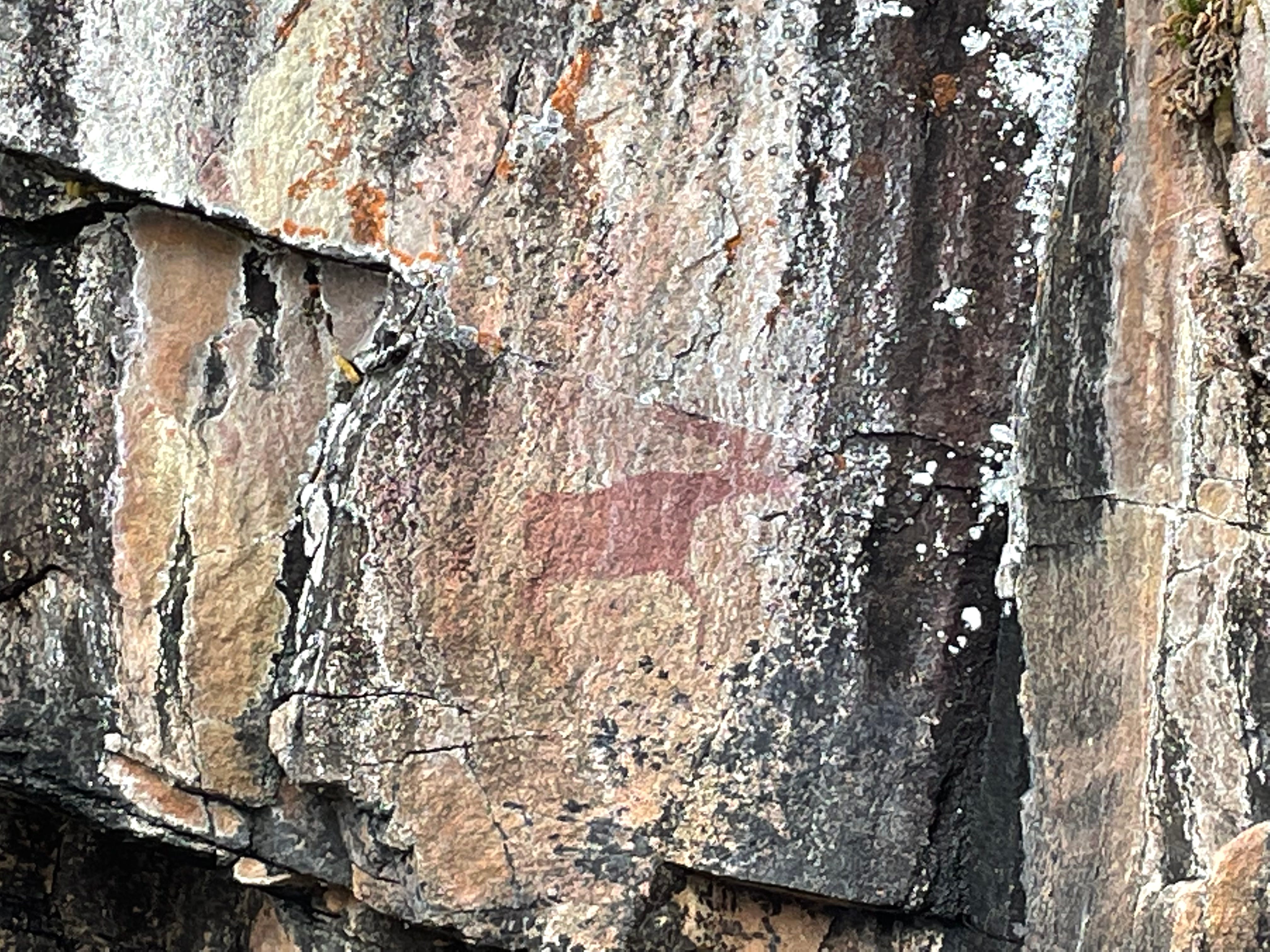
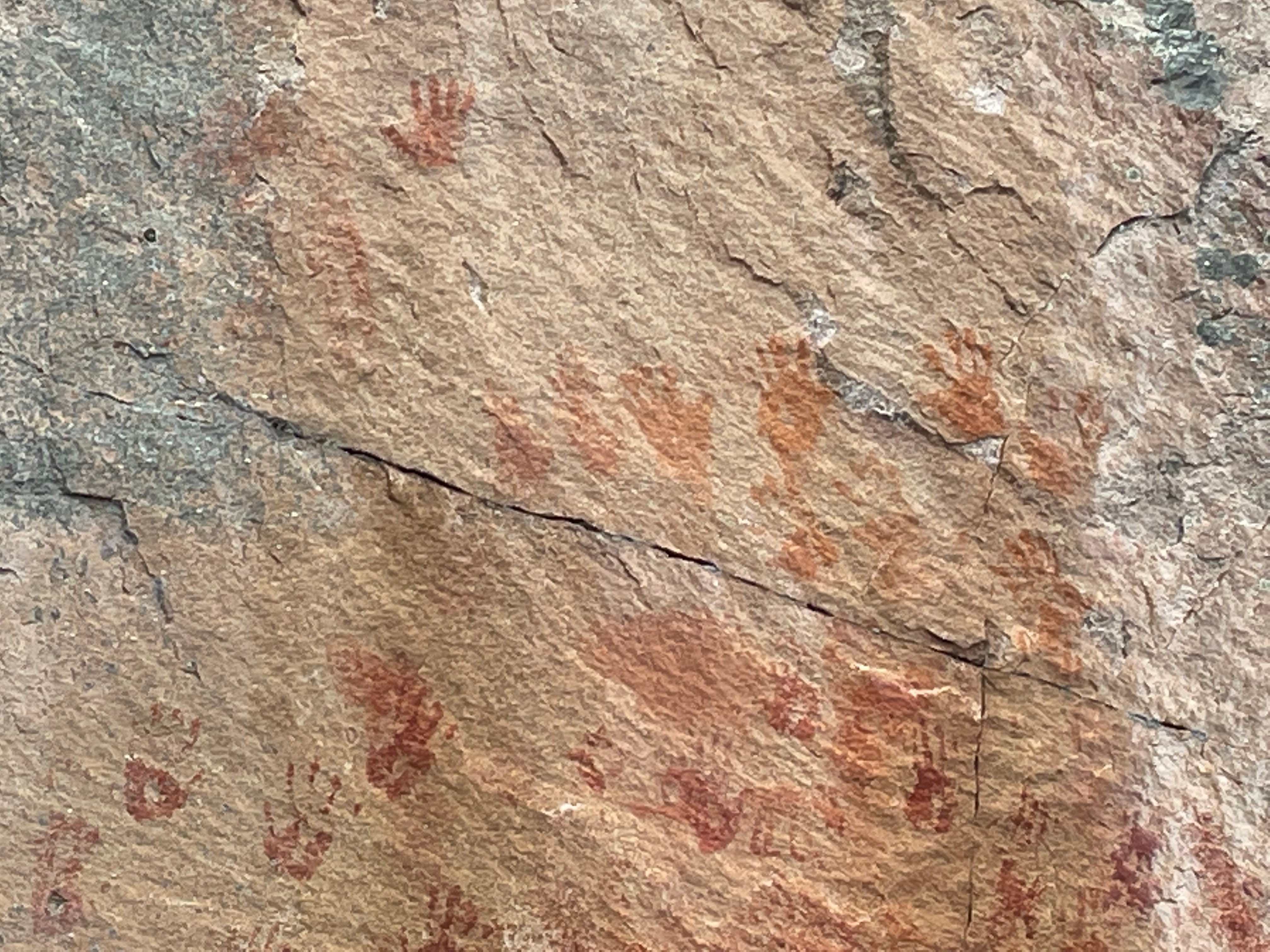
“Every time I’ve come up here, it turns like this,” he said of the weather. It was no doubt coincidental, but it added to the mystery and sanctity of it all. We steered around the rock, taking it all in, then finally turned back to the open water to continue on our journey.
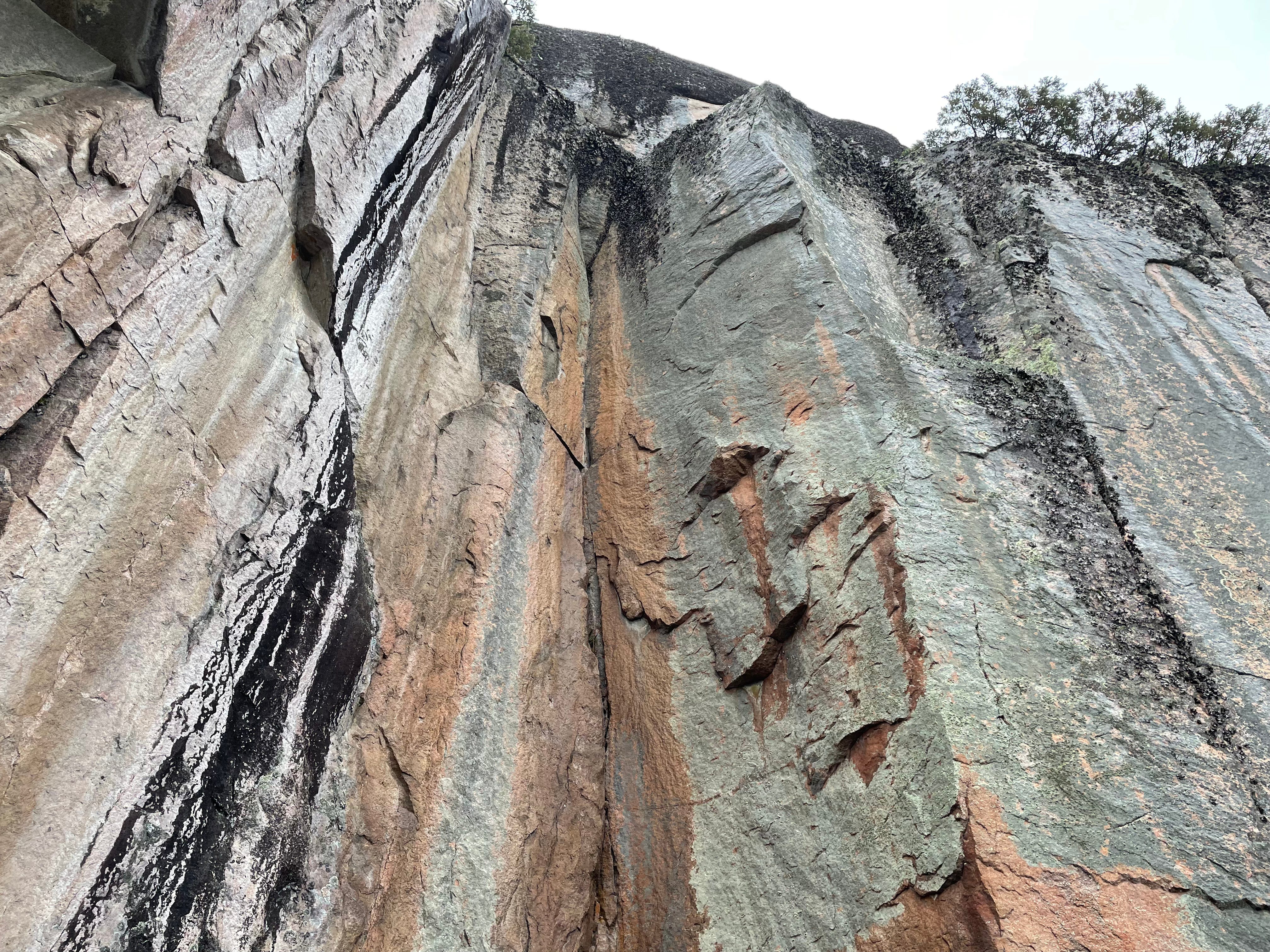
The next few days are a montage of incredible beauty and extreme exhaustion. Each started with glassy water, then was interrupted by high winds a few hours later, which seemed to be in our face, no matter which direction our path took us. It was hard ass work to paddle across the larger lakes, and sometimes a little scary. No trip since has been like that, and Erich said he had never fought against the wind like that before. He was sure it would ruin the trip for me.
Because I was the motor and because the wind was so bad, I had to paddle for everything I was worth just to make progress. My arms felt like spaghetti. My core was exhausted. But I never once complained, only dug in harder. I felt honored to do this work. Privileged to be in the majesty of such wilderness. I was grateful to Erich for bringing me here and trusting me to appreciate this place that was so important to him. Even though I had planned to try not to complain, it took no effort. I was too “in” the experience.
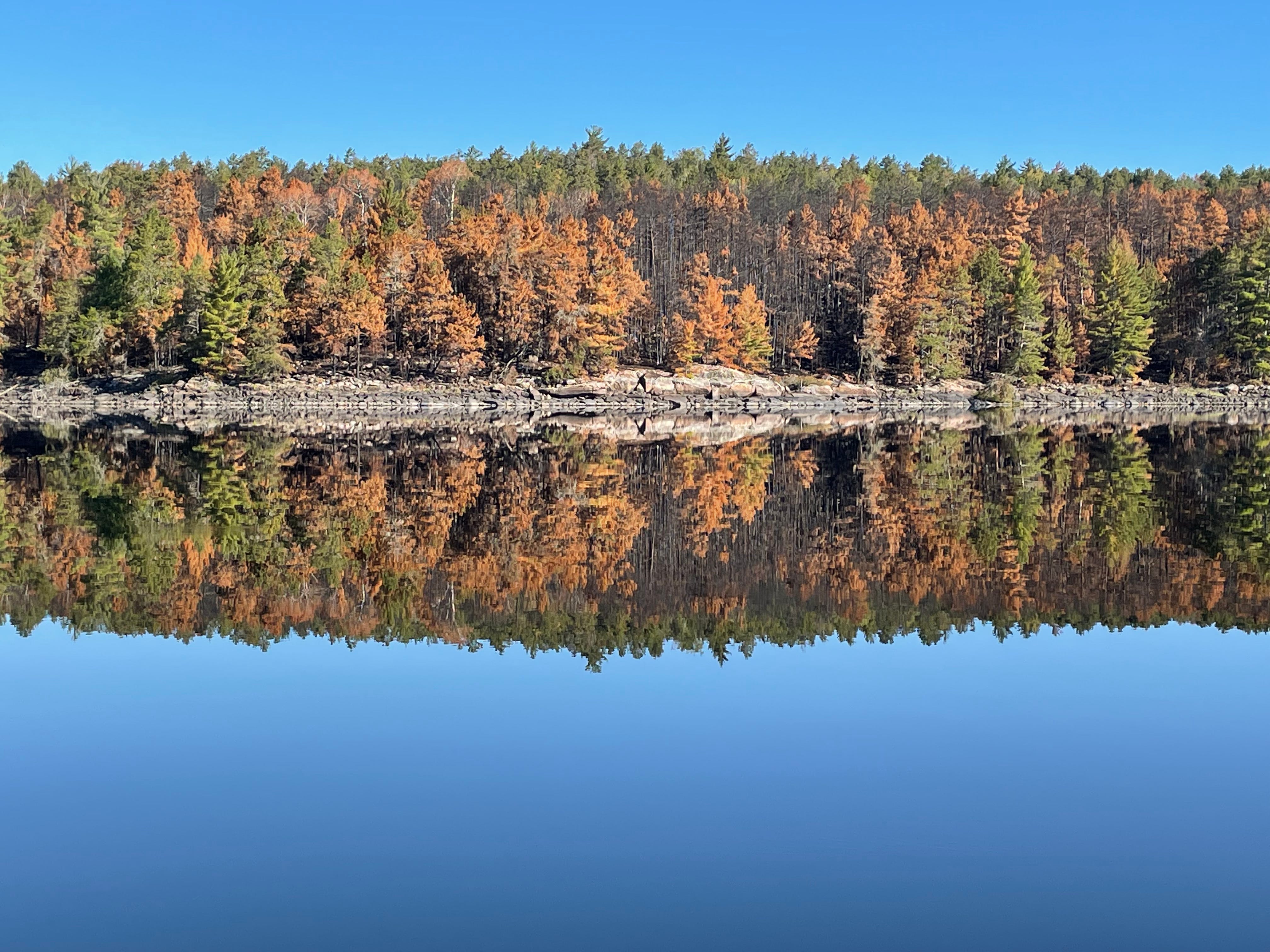
Somewhere at the end of Iron Lake, while the water was calm, a startling marvel immediately grabbed my attention. I was able to capture it on camera, although not with the impact that it had when it was live and in the moment. The low water had revealed more of the rocky shoreline, and the reflection created a totem pattern effect that I recognized right away from First Nation artwork. When I say this blew my mind, I am not being hyperbolic. It was so striking and awesome, I cried.
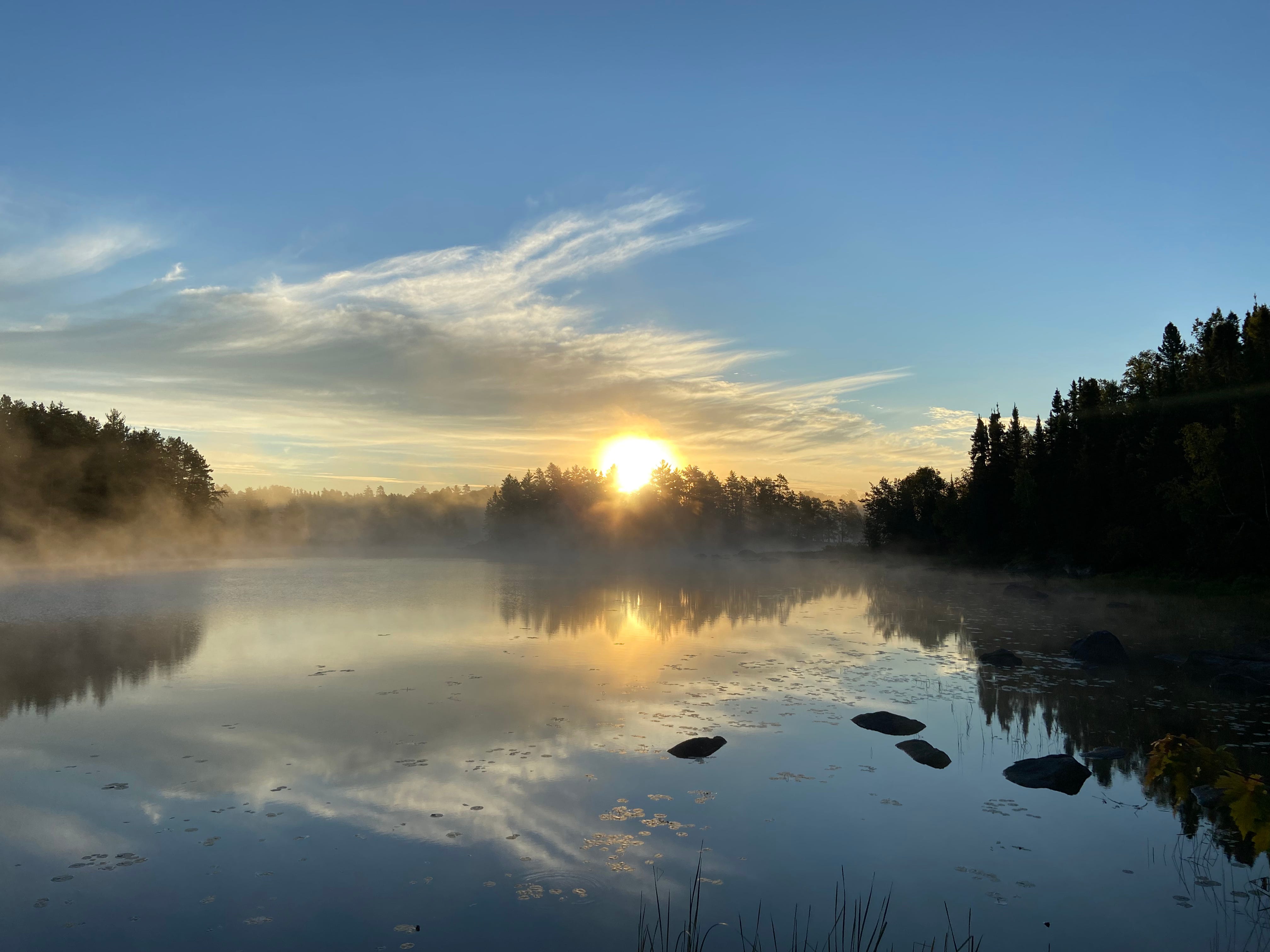
I saw a waterfall, sunrises, and skies that took my breath away. I heard a beaver crashing through the forest with a huge limb before appearing on the shoreline and dragging it into the water for his dam. Otters swam playfully near our canoe on a smaller lake, charming us with their furry tummies and grabby hands.
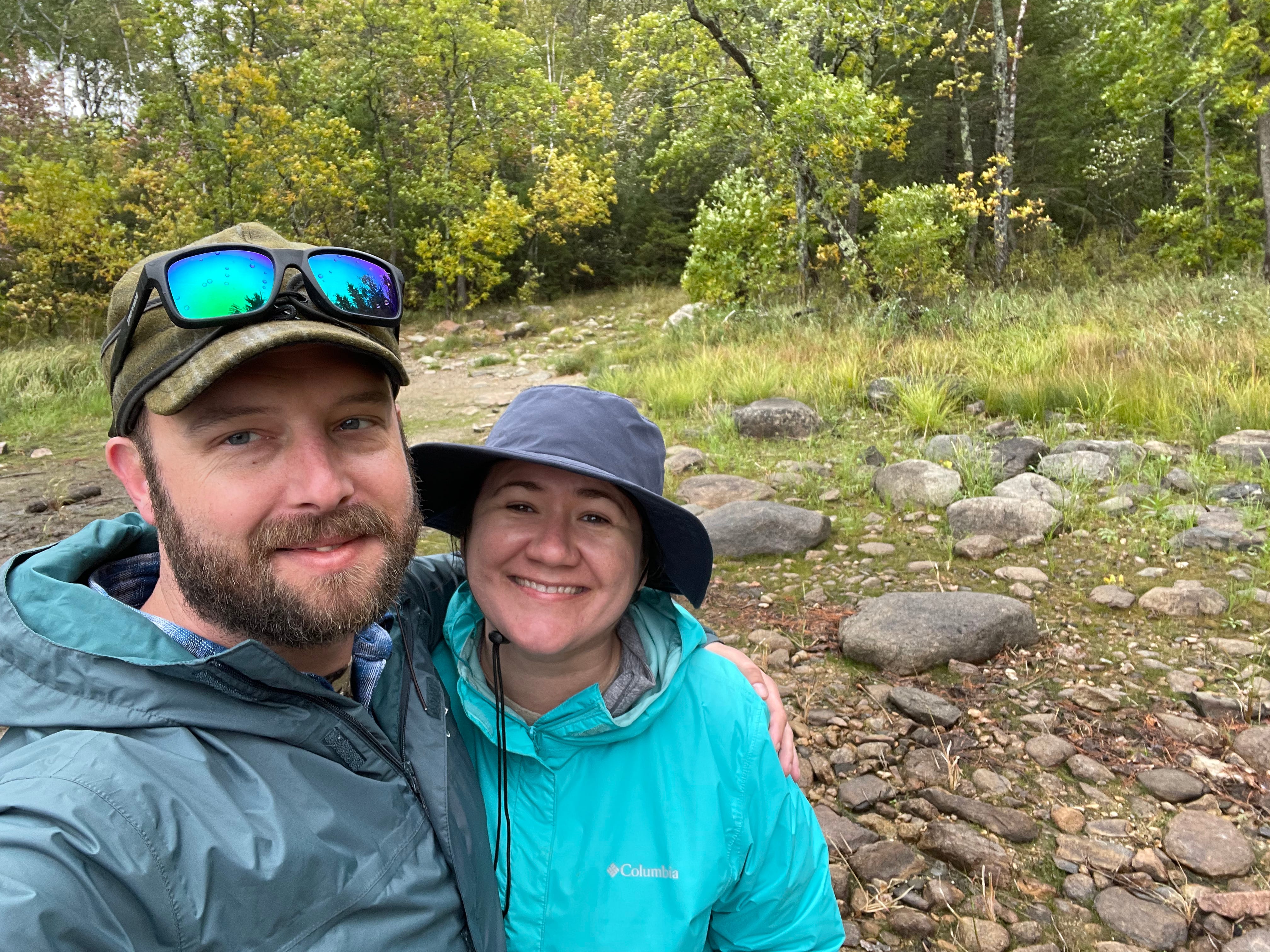
We paddled and portaged for about 60 miles, carrying 50 lb. packs on our backs across the portages. Erich, thankfully, handled the canoe himself. It was hard work, and it was worth it. So very worth it.
Since that trip, I’ve been back three times, and each one is a new experience. On the last trip, we saw a bull moose with a massive rack crossing a lake. He was so fast, and his rack so large, we thought it was another canoe, hauling ass until we got close enough to recognize what it actually was. When the bull stepped out of the water and shook himself, we stared at him, dumbstruck. We also stayed a good distance away after seeing how well and quickly he could swim. We watched as he disappeared into the woods, crashing through with his gigantic crown. It was one of the most spectacular things I’ve ever witnessed.
Just a few days ago, the Senate voted 50 to 49 to overturn a 20-year moratorium on mining in Minnesota’s Superior National Forest. Twin Metals intends to mine copper within the watershed shared by the Boundary Waters. This will have severe negative effects.
I recently read a book called Murderland by Caroline Fraser, in which she outlines the effects of mining and smelting on not only the ecosystem but also the people within it. One of the things that stood out to me was what she shared about Lake Coeur D’Alene in Idaho. Apparently, there are estimated to be 75 billion metric tons of toxic sediment, including arsenic, lead, and other heavy metals, at the bottom of the lake from 100-plus years of nearby mining activity. Once these have been released into the world, they do not go away. Despite the cleanup efforts, the lake continues to test for these toxins at ten times the normal rate. The swans that stop at the lake die by the hundreds every year, and people swim with their children in that water, unaware of their exposure.
I am devastated to think that this could happen to the Boundary Waters. I donate to the cause and have written my senators (before and after the vote). Although this vote was a huge hit, the fight isn’t over. It will take time for Twin Metals to obtain the permits it will need to mine there, and that is where it can still be stopped.
If this piece moved you to do so, please consider donating to the efforts of saving this natural gem that so much wildlife calls home.
Thank you for taking the time to read this love letter to the BWCA. Please go see it for yourself. I will go with you!
Love,
M
Beautifully captures a magical place and it is absolutely heartbreaking about this sacred place. I have been a few times and I love it deeply.
You people who leave the house are absolutely fascinating. Aren't you worried you are going to stub your toe or something?